New WEO–Rabobank Report Explores the Future of Egg Value Chains
 21 September 2026
The egg industry is entering a new era of digital transformation, with data, automation, artificial intelligence and connected technologies increasingly becoming part of the way businesses operate across the value chain.
To explore what this could mean for the global egg industry, WEO and Rabobank have launched a new report, The Future of Egg Value Chains: How Data, Digital Tools, and Smart, Connected Systems Will Reshape the Industry.
The report was officially launched on Tuesday 8 September at the WEO Global Leadership Conference in Singapore, as part of WEO’s ongoing knowledge partnership with Rabobank.
Expertly developed by Nan-Dirk Mulder, Senior Global Specialist in Animal Protein at Rabobank, the report also draws on valuable insights and feedback from a select group of WEO members representing different disciplines and regions across the egg value chain. It is the second joint publication from the partnership, following the Global Egg Industry Outlook 2035, published last year.
From technology adoption to connected value chains
 Digitalisation is already beginning to change egg production, but the report suggests that the bigger opportunity may lie beyond individual technologies.
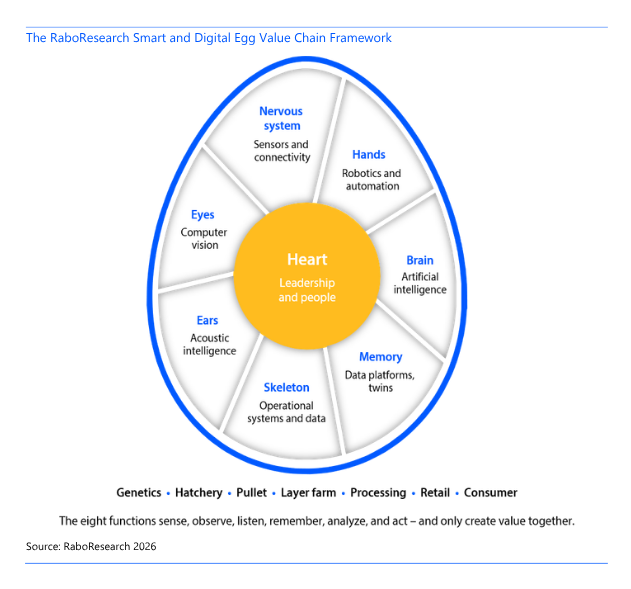
Sensors, computer vision, robotics, automation and AI can support more efficient and predictable operations, but their value increases when the data they generate can be connected across systems and, ultimately, across the wider value chain.
The report explores the forces driving this transition, from labour availability, feed and energy costs and disease risk to growing expectations around sustainability, animal welfare, transparency and traceability.
It also introduces the Smart and Digital Egg Value Chain Framework, providing a way of looking at how technologies and data can work together to create smarter, more responsive operations.
What could the egg industry of 2040 look like?
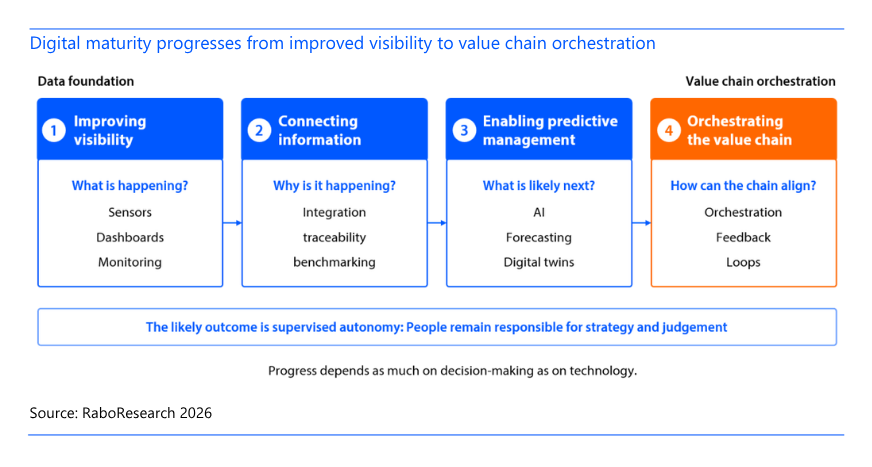
Rather than presenting digital transformation as a sudden revolution, the report sets out a gradual path – from improving visibility and connecting data, through predictive management, towards greater value-chain orchestration.
 Alongside the opportunities, it considers some of the important questions the industry will need to address, including data governance, interoperability, cybersecurity, investment priorities and the skills needed to make digitalisation work in practice.
Ultimately, the report argues that the future will not be about technology replacing production expertise. Instead, smart technology, automation, data and AI have the potential to strengthen the foundations of successful egg production – from genetics and nutrition to animal health, housing and management.