The egg industry’s commitment to the UN Sustainable Development Goals
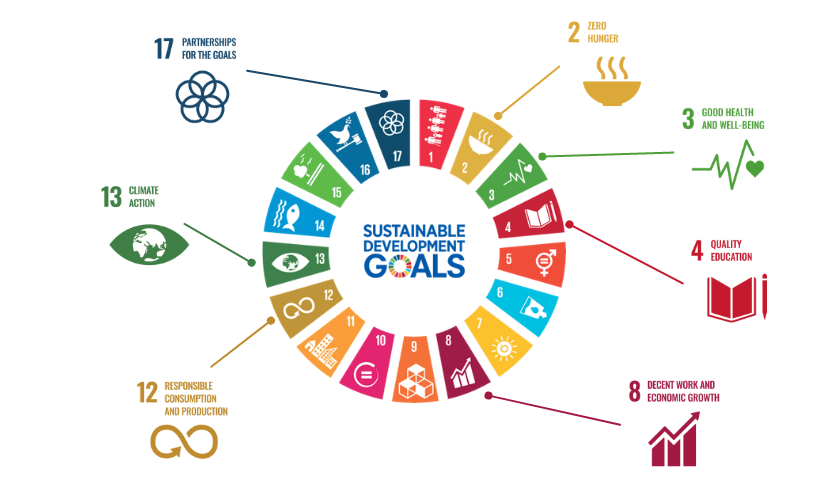
In 2015, 193 world leaders committed to the United Nations 17 Sustainable Development Goals (SDGs). These goals represent a shared vision to eradicate poverty and social inequality, and tackle climate change by 2030.
WEO has committed to advocate ongoing improvement in sustainability within the egg industry and work in partnership with the UN to fulfil its SDGs.
Of the 17 SDGs, the global egg industry has identified 7 primary objectives where it is already making a significant impact through a range of dedicated sustainability initiatives.
Key areas where the egg industry supports the SDGs:
Zero Hunger
According to The State of Food Security and Nutrition in the World (SOFI) 2025 report, there are signs of a decrease in world hunger in recent years. Current global estimates stand at around round 8.2%, down from 8.7% in 2022. The egg industry recognises its role in helping to prevent hunger around the world.
Eggs are a sustainable, affordable source of the highest quality protein. They contain the majority of vitamins, minerals and antioxidants required by the body and have been proven to be associated with better growth, cognitive performance and motor development among children, particularly in low-income countries.
Good Health and Well-being
Eggs are recognised as a high-quality protein and contain a lot of essential vitamins and minerals. The bioavailability and density of their nutrients mean eggs have the capacity to directly improve human health outcomes around the world.
Furthermore, eggs are a good source of commonly deficient micronutrients, such as vitamins D and B12, and one of the best sources of the lesser known yet vital nutrient, choline. The egg industry is committed to increasing awareness of the positive benefits of egg products, in relation to good health and wellbeing.
Quality Education
Egg consumption supports brain development and concentration, particularly in young children, which can be attributed to their high choline content. Additionally, the egg industry is dedicated to educating the world about the value eggs provide, in terms of nutrition, environment and livelihoods.
Decent Work and Economic Growth
The egg industry is a significant source of income for rural populations around the world. An estimated 3.8 billion people worldwide (nearly half of the global population!) live in a household linked to an agrifood system, relying on smaller farms that provide a regular source of food and income.
In low and middle-income countries, women make up a significant proportion of small-scale egg farmers. They typically raise small flocks to help feed their family and generate income for essentials like children’s schooling.
To demonstrate the industry’s commitment to supporting decent work, WEO adopted the Consumer Goods Forum’s (CGF) resolution on forced labour in April 2018. This commitment made the egg industry the first global commodity group to take these steps to promote human rights and decent working conditions.
Responsible Consumption and Production
The egg industry is committed to producing nutritious foods in environmentally sound and responsible ways. While eggs are officially recognised as a low impact protein source, egg businesses are always looking for new ways to make production more environmentally sustainable.
Examples of this can be seen around the world as the global egg industry increasingly focuses on investing in practices that reduce environmental impact. These include feed supply chain transparency, circular farming innovations, and minimising manure emissions.
Climate Action
Egg businesses continually strive to reduce the resources they use whilst ensuring the same level of output. Thanks to new efficiencies and significant productivity gains, eggs continue to have a lower environmental footprint year-on-year. In 2023, a study showed that eggs should be eaten as part of a diet that balances sufficient micronutrient intake with being conscious of planetary health.
To champion the continuous development and improvement of environmentally sustainable practices throughout the egg value chain, WEO has brought together a Sustainable Egg Production Expert Group. This enables best practice and the latest thinking to be shared throughout the egg industry globally.
Partnerships for the Goals
As global representative of the egg industry, WEO plays an important role in bringing together countries and organisations to achieve these SDGs. To this end, the organisation continues to develop constructive relationships with the World Organisation for Animal Health (WOAH), the World Health Organization (WHO), and major egg associations worldwide, as well as sustaining communication with the CGF, the United Nations (UN) and the UN Food and Agriculture Organization (FAO) to address a range of sustainability issues.
Sustainable Egg Production Expert Group
WEO has brought together experts with an interest in sustainable agricultural food production to support the egg industry to continue to lead the way in sustainable protein production globally.
Meet the Expert Group